
PHOENIX: Rising and Rebuilding
A Worlds Hack LA pilot on wildfire resiliency and the future of participatory housing design — captured with XGRIDS LCC Creator and PortalCam, rebuilt with generative 3D, and delivered on the open XR web via Arrival.space.
Live on Arrival.space
The pilot
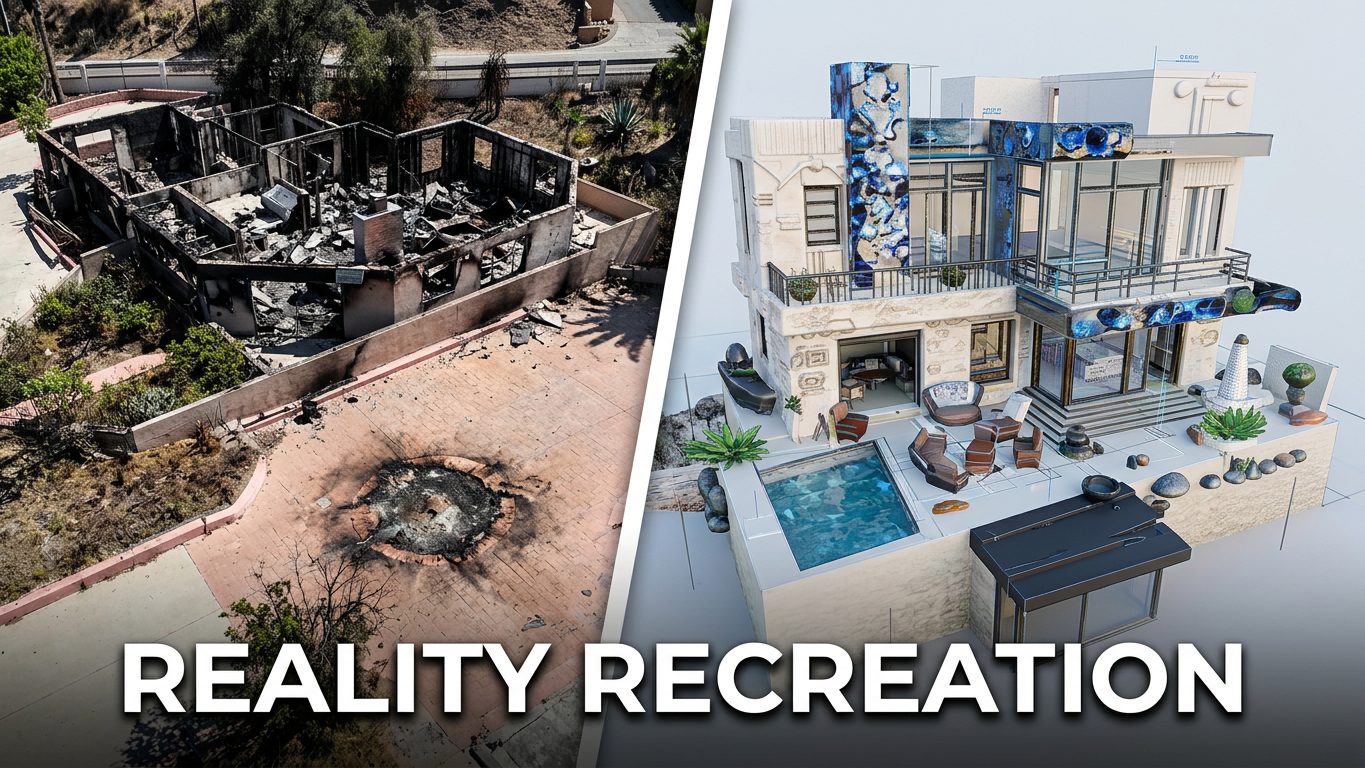
Phoenix is an immersive wildfire resiliency story built during the Worlds Hack LA pilot. It takes one real loss — a Los Angeles home that burned — and turns it into a walkable spatial experience: a visit to what was, a vision of what will rise, and a working toolkit of fireproof materials, defensible space guidance, and post-fire rebuilding resources.
The pilot answered a specific question. After a total loss, the path to rebuilding is slow, expensive, and emotionally opaque. Homeowners face a wall of permits, contractors, insurance, and material choices before they can even picture a future on their own lot. Phoenix asked whether reality capture, generative 3D, and the open XR web could compress that distance, letting a person stand inside their former foundation and begin to design what comes next.
- Event
- Worlds Hack LA (resiliency theme) with SensAI
- Format
- WebXR world on Arrival.space, fronted by a Lovable story site
- Story anchor
- Ray Aschheim's home and the Los Angeles / Topanga fire landscape
- Capture stack
- XGRIDS LCC Creator + PortalCam + Lixel L2 Pro, LCC Studio export
- Rebuild stack
- Gaussian splatting, Tripo3D generative assets, Arrival.space staging
- Delivery
- WebXR in-browser + Pico headset (via Amir's Pico emulator)
- Built with
- Claude, Lovable, CapCut, and partner capture + generation tools
- Producer
- Evo Heyning (Realitycraft / XRGuide)
The crew
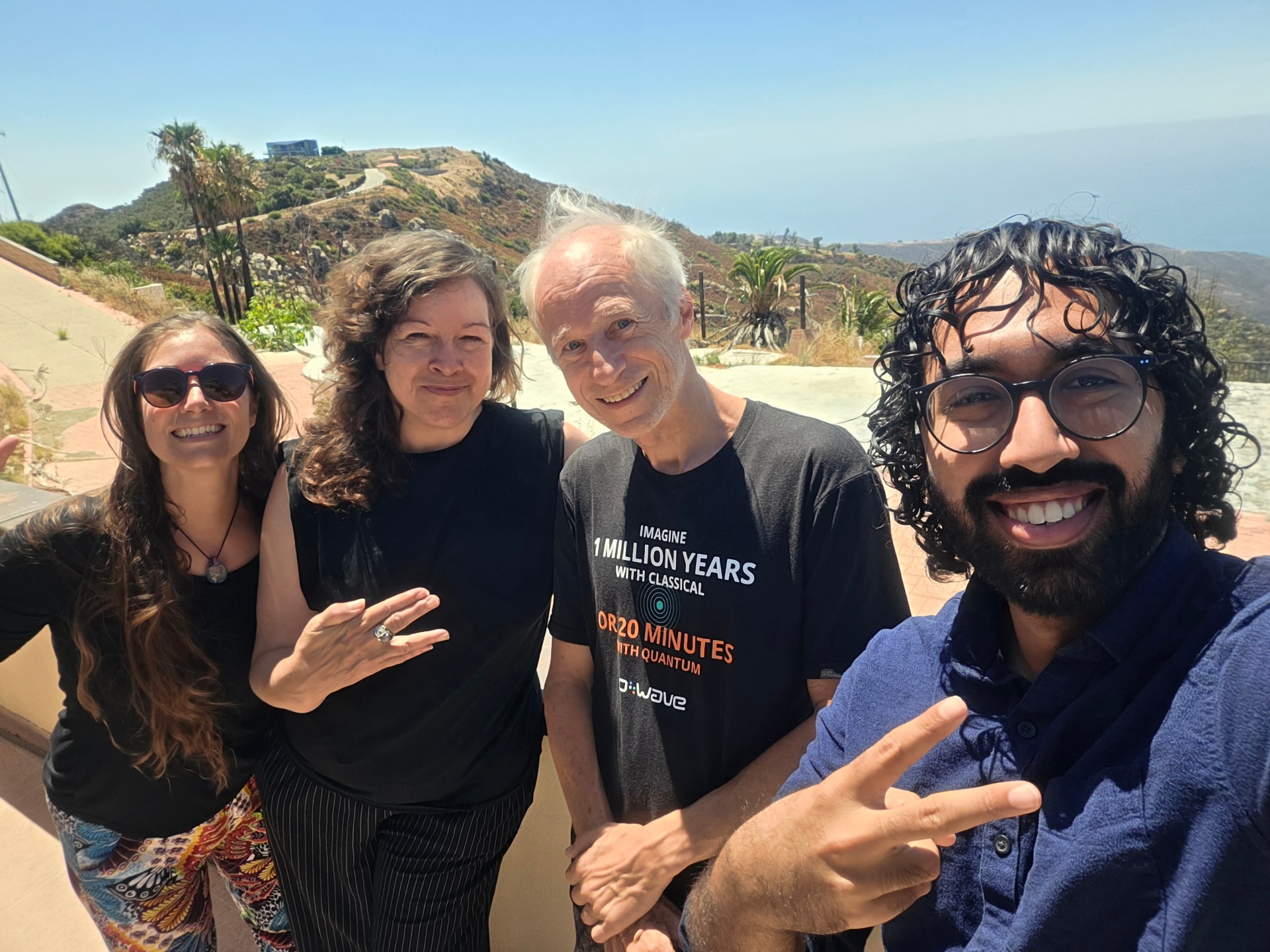
- Ray AschheimArchitecture & location-based systems
- Amir Mohideen Basheer KhanWebXR engineering & Pico emulator
- Josette SeitzReality capture
- Evo HeyningProducer, storytelling, interviewer
Technical partners: XGRIDS (LCC Creator), Tripo3D, Pico, Arrival.space, WorldLabs.
Why resiliency, why now
California's fire seasons no longer end. For families in the wildland-urban interface, the question is not whether the front arrives but what stands after it passes. The public infrastructure for recovery is fragmented: FEMA and CAL FIRE guidance, insurance adjusters, debris removal, permitting, and a materials market most homeowners have never had reason to learn. The result is a recovery that is slow at exactly the moment people most need to see a future.
Phoenix reframes resiliency as something you can walk through and design, not just read about. The pilot treats the home as the unit of climate adaptation and the homeowner as the designer, with the harder knowledge — fireproof assemblies, defensible space, code — embedded in the experience rather than buried in PDFs.
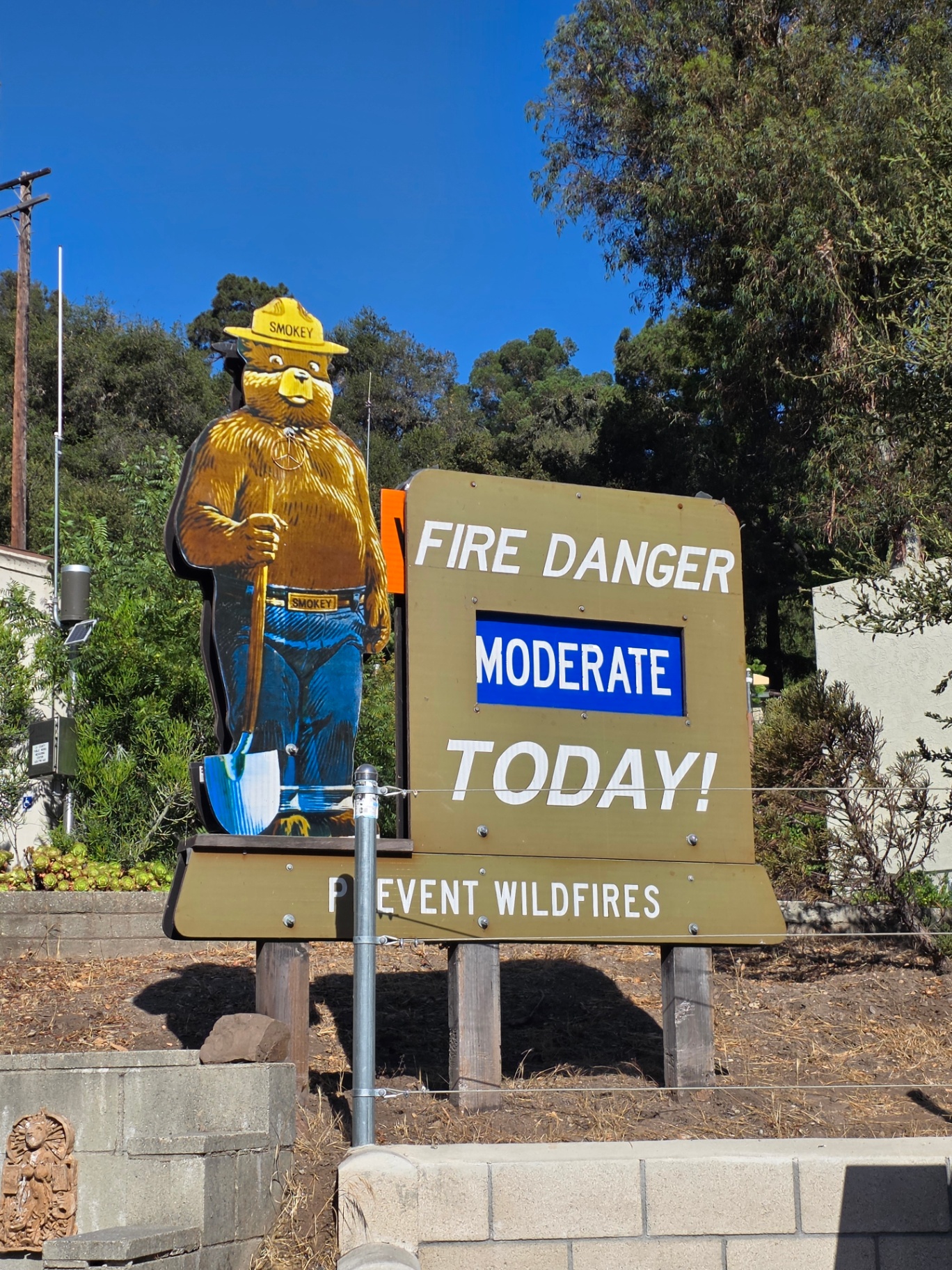
- Fireproof building materials: Class-A roofing, ember-resistant vents, and non-combustible siding. Ready for Wildfire
- Rebuilding after wildfire: FEMA and CAL FIRE guidance for structural assessment, debris removal, and permitting after a total loss. FEMA
- Defensible space: Zone-based landscaping and 100-foot clearance strategy. CAL FIRE
- Community recovery: Mental health, mutual aid networks, and long-arc rebuilding rituals. SAMHSA
The technical build
Phoenix ran the full arc from physical loss to generative rebuild to cross-device delivery. Four pillars carried the pilot.
1. Reality capture with XGRIDS LCC Creator
The foundation of Phoenix is the captured fire-affected site. The team used a layered capture approach rather than relying on any single sensor: XGRIDS handheld scanning for dense ground-level capture, phone photogrammetry for infill and texture, and drone/aerial passes for parcel context and roofline. Capture was done with #PortalCam and the Lixel L2 Pro, with Creator Data exported straight from LCC Studio.
The output was delivered as Gaussian splats loaded directly into the Arrival.space world — LCC supports direct export to Arrival.space, which kept the pipeline short. Splatting matters here for a reason beyond novelty: a mesh reconstruction of a burned home looks clean and abstract. A splat holds the ash, the char, the exact quality of light through what remains. For a story about loss and return, fidelity to the real is the point.
2. AI asset and world generation: designing what rises
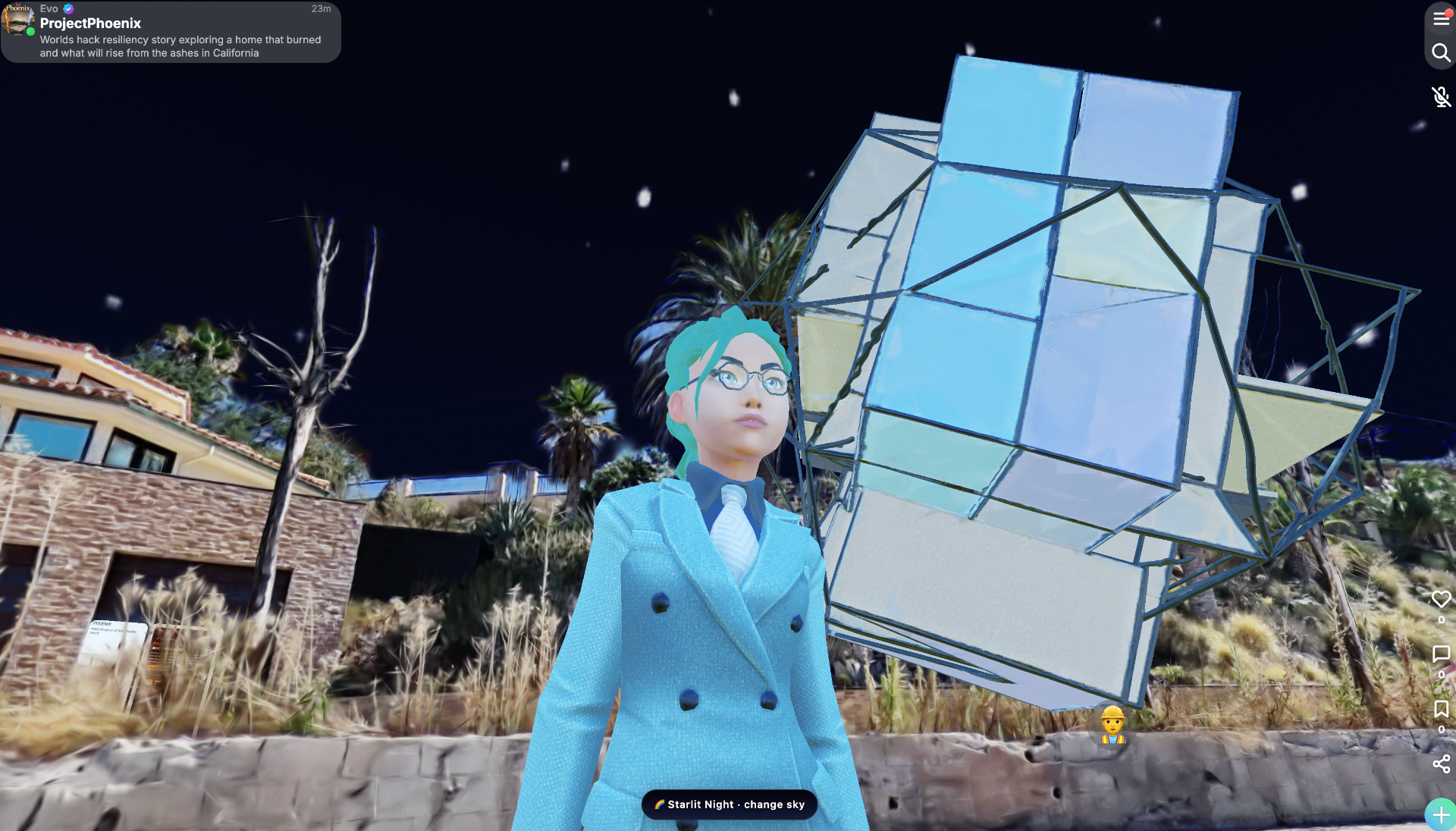
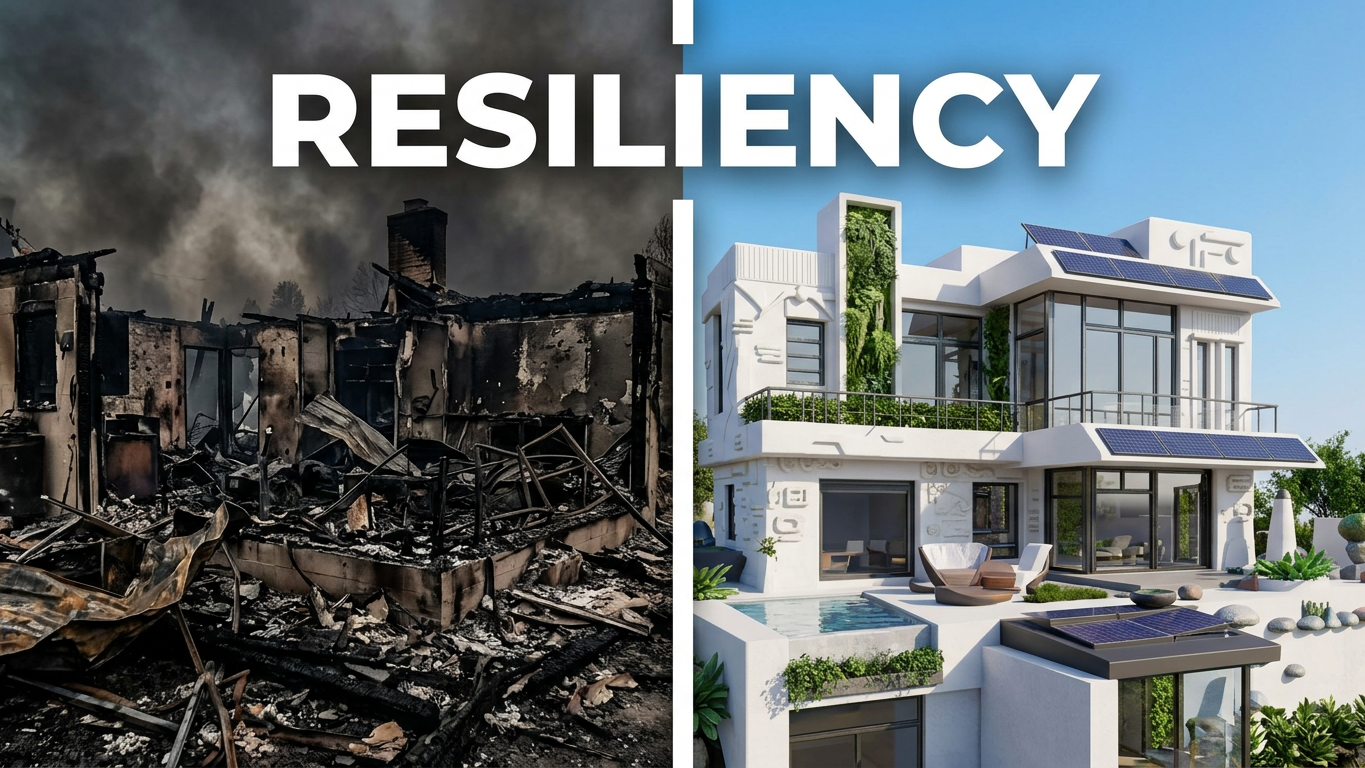
If capture holds what was, generation carries what will rise. The rebuild pipeline combined Tripo3D for generative 3D assets, Claude and Lovable in the loop for content and story-site iteration, and hand composition in Arrival.space where a person turned a pile of generated objects into a coherent architectural vision. WorldLabs sat in the partner set as part of the broader world-generation exploration; the shipped rebuild leaned on the Tripo plus hand-staged path.
3. Resilient materials as design-embedded data
The fireproof and climate-resilient materials study is the intelligence layer, not a footnote. Ray's architectural knowledge and the CAL FIRE / Ready for Wildfire body of practice informed both the resource toolkit and the design language of the rebuild: Class-A roofing, ember-resistant venting, non-combustible siding, and defensible-space zoning as first-class design constraints. The ambition is materials-as-metadata — a rebuild asset that carries its fire rating, assembly, and code implications with it.
4. WebXR delivery and the Pico emulator
Phoenix was designed for two doors at once: enter with a headset for full immersion, or explore in the browser with no install. Amir built a browser-based Pico headset emulator during the pilot as a test harness — a way to preview immersive scenes, controller inputs, and spatial UI without shipping a build to a physical device each iteration. It is one of the most reusable outputs of the sprint.
The Phoenix build on video
More clips on the XRGuide video page and in the news feed.
What we learned
- Time and scope was the defining constraint. The hardest problem was sequencing an ambitious pipeline — capture, generation, staging, delivery — inside a sprint. Next time: lock the thinnest end-to-end path first, then widen.
- Fidelity is emotional, not just technical. Choosing Gaussian splats over clean meshes was a storytelling decision as much as an engineering one. Protect that choice against performance pressure.
- Interoperability is the tax on the whole spatial web. Moving between capture output, generated assets, and platform-native formats is where hackathon hours quietly disappear. LCC Creator Data and the Pico emulator were the correct structural responses.
- The human staging step is a feature. Generation produced parts; a person made architecture. That previews exactly where a resident or planner steps into the loop.
Participatory public design
Phoenix is a pilot, and its real value is what it proves is now buildable. The through-line is community rebuild co-design: turning the private, opaque, expensive act of rebuilding after loss into a shared, visual, participatory process.
A resident walks their own captured lot in the browser or a headset, sees resilient rebuild options staged in place, and co-designs what comes next with neighbors, an architect, and a planner in the same spatial room. Fireproof assemblies and defensible-space rules are not homework — they are the material palette. The distance from total loss to "I can picture my future here" collapses from months to an afternoon.
- Civic planning and permitting: immersive parcel twins for defensible space, massing, and zoning review.
- Insurance and resilience proof: immersive documentation of resilient rebuilds as a richer record than a claims form.
- Memory and mutual aid: the captured site becomes a place for neighborhoods to coordinate recovery as a shared ritual.
Realitycraft and XRGuide bring this into the open, interoperable XR web on purpose. Recovery infrastructure should not be locked inside one vendor's headset or one platform's walled garden. Building Phoenix on Arrival.space and the open web is a bet that participatory public design has to be as accessible as the communities it serves.